
Blog post
AI in the Battle for Global Health

16 oct. 2025
by University of Thessaly
When microbes learn to fight back: Artificial Intelligence (AI) in AntiMicrobial Resistance (AMR)
Every year, millions of people die due to infections that could not be treated, because the drugs no longer work on them. This is the reality of AMR, where bacteria and viruses learn to resist the drugs designed to eliminate them.
At the University of Thessaly (UTH), through the ESCORT project, we utilize the power of AI to predict, monitor and respond to such emerging threats before they get out of control.
Preventing Drug-Resistant Tuberculosis
Tuberculosis (TB) remains one of the most persistent examples of drug resistance. When first line treatments stop working, multi-drug-resistant TB (MDR-TB) cases require longer therapies that put more pressure on both patients and healthcare systems. For this reason, UTH implemented a Deep Learning model, i.e., Long-Short-Term-Memory (LSTM) model, trained over relevant data, that can forecast TB incidence, deaths and resistance patterns.
While simulating hypothetical yet realistic scenarios, the model successfully detected an abnormal rise in MDR-TB cases in Greece, showing how AI can alert health authorities early enough to act before an outbreak spreads!
Tracking CBRN Threats
As part of the ESCORT project, UTH expanded the implemented models to monitor Chemical, Biological, Radiological and Nuclear (CBRN) threats as well. Using appropriate data, UTH simulated a hypothetical accidental lab escape of pneumonic plague in a European city. This implementation helped us visualize how such an event might evolve geographically and demographically, supporting decision making by health authorities in real world scenarios.
For the Radiological and Nuclear aspect, UTH developed a Lagrangian dispersion model to simulate the spread of radiation (Cs-137, Xe-133 and I-131) in a hypothetical nuclear incident at a nuclear power plant in Europe. We integrated meteorological data and generated maps of radioactive plume dispersion, enabling quicker and accurate responses.
Disease X: Predicting the Unknown
Inspired by the “Disease X”, a term used by the World Health Organization to describe a hypothetical pathogen with pandemic potential, UTH built an early warning system to prepare for such cases. Combining health indicators (e.g. cases, deaths, demographics) with mobility data, pharmacy sales, search trends and social media data. Combining three AI models (e.g. LSTM Autoencoders, One-Class SVM and Isolation Forest), UTH managed to create a powerful tool that accurately detects anomalies, ensuring the successful detection of the “unknown disease” before it becomes the next global health crisis.
When AI Models Meet the Real World
In a world where outbreaks and disasters threaten our lives more than ever, prevention is everything. AI does not replace human experts, however, it can responsibly support them in decision making, and empower them to respond faster and smarter through accurate predictions. The ESCORT project proves that AI can make public health surveillance systems from observational to predictive, helping experts act before crises unfold.
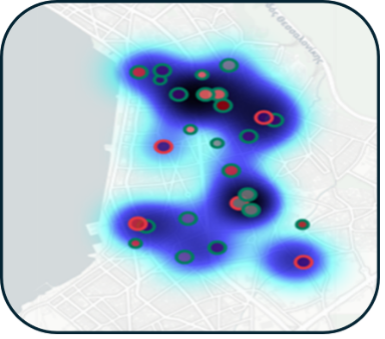
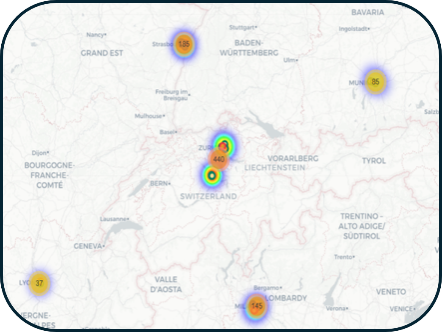
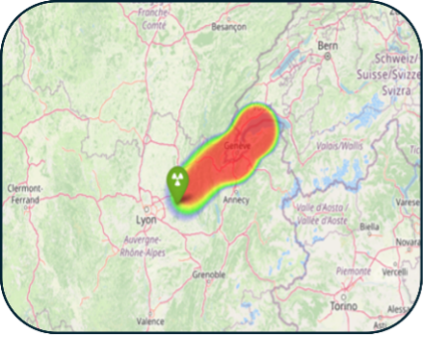
Figure 1. Rifampicin-Resistant Tuberculosis
Spread in Greece
Figure 2. Plague Spread in a European city
Figure 3. AI simulation of radioactive plume spread